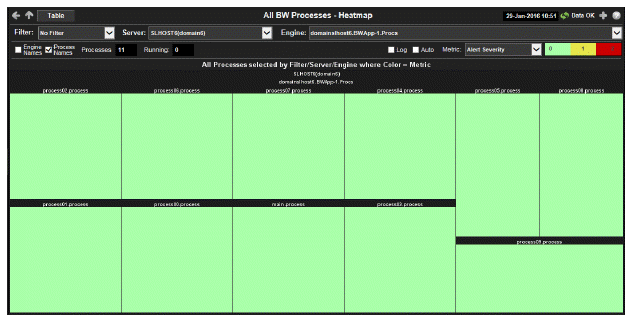
Summary view of processes can show the execution times for all processes on all engines or you can filter to look at specific servers or engines. Each rectangle (node) in the heatmap represents a process. Move your mouse over a node to display current metrics. Click on a node to drill-down to the Single Process Summary display to view specific metrics about process behavior over a specified period of time and determine which activity in the process may be causing the bottleneck.
An engine is not running when the engine name is appended with (X).
Mouse-over any node to display the current values for the metric selected from the Metric drop-down menu.
|
Filter By: The display might include these filtering options: |
||||
|
|
Filter: |
Choose a filter to show data for in the display. By default, the Filter: drop-down menu only contains the No Filter option. To create your own filtering options, see Creating Customized Filters in the User’s Guide. |
||
|
|
Server: |
Choose a server to show data for in the display. |
||
|
|
Engine: |
Choose an engine to show data for in the display. An engine is not running when the engine name is appended with (X). |
||
|
|
Engine Names |
Select this check box to display the names of the engines above their respective rectangles in the heatmap. |
||
|
|
Process Names |
Select this check box to display the names of the processes above their respective rectangles in the heatmap. |
||
|
|
Processes |
The total number of processes in the display. |
||
|
|
Running |
Number of processes currently running. |
||
|
|
Log |
Select to enable a logarithmic scale. Use Log Scale to see usage correlations for data with a wide range of values. For example, if a minority of your data is on a scale of tens, and a majority of your data is on a scale of thousands, the minority of your data is typically not visible in non-log scale graphs. Log Scale makes data on both scales visible by applying logarithmic values rather than actual values to the data. |
||
|
|
Auto |
Select to enable auto-scaling. When auto-scaling is activated, the color gradient bar's maximum range displays the highest value. NOTE: Some metrics auto-scale automatically, even when Auto is not selected. |
||
|
|
Metric |
Choose a metric to view in the display. |
||
|
|
|
Alert Severity |
The maximum level of alerts in the heatmap rectangle. Values range from 0 - 2, as indicated in the color gradient
|
|
|
|
|
Alert Count |
The total number of critical and warning alerts in the heatmap rectangle. The color gradient |
|
|
|
|
Completed Count |
The total number of completed processes in the heatmap rectangle. The color gradient |
|
|
|
|
Active Count |
The total number of active processes in the heatmap rectangle. The color gradient |
|
|
|
|
Aborted Count |
The total number of aborted processes in the heatmap rectangle. The color gradient |
|
|
|
|
Suspended Count |
The total number of suspended processes in the heatmap rectangle. The color gradient |
|
|
|
|
Exec Time / sec |
The number of processes executed per second in the heatmap rectangle. The color gradient |
|
|
|
|
Created / sec |
The number of processes created per second in the heatmap rectangle. The color gradient |
|
|
|
|
Aborted / sec |
The number of aborted processes per second in the heatmap rectangle. The color gradient |
|
|
|
|
Suspended / sec |
The number of suspended processes per second in the heatmap rectangle. The color gradient |
|
|
|
|
Most Recent Exec Time |
The execution time for the most recently executed process in the heatmap rectangle. The color gradient |
|
|
|
|
Average Exec Time |
The average execution time for all processes in the heatmap rectangle, calculated by dividing the delta execution time for the interval by the delta completed, or the number of process instances that completed in the interval. The color gradient |
|
|
|
|
Most Recent Elapsed Time |
The elapsed time for the most recently executed process in the heatmap rectangle. The color gradient |
|
|
|
|
Average Elapsed Time |
The average elapsed time for all processes in the heatmap rectangle, calculated by dividing the delta elapsed time for the interval by the delta completed, or the number of process instances that completed in the interval. The color gradient |
|


